

By Curavya Home Care — Trinity Health Center | Vadodara
Quick Answer: Gastroenteritis — inflammation of the stomach and intestines, usually from a viral, bacterial, or parasitic infection — spikes every monsoon due to contaminated water, spoiled food, and unwashed produce. Most cases clear up in 2–3 days with fluids and rest. But dehydration signs, blood in the stool, high or prolonged fever, or symptoms in a child, elderly person, or pregnant woman mean it's time to see a doctor. Book a home doctor visit or stool/blood test with Curavya in Vadodara.
Why Monsoon Brings a Wave of Stomach Infections in Vadodara
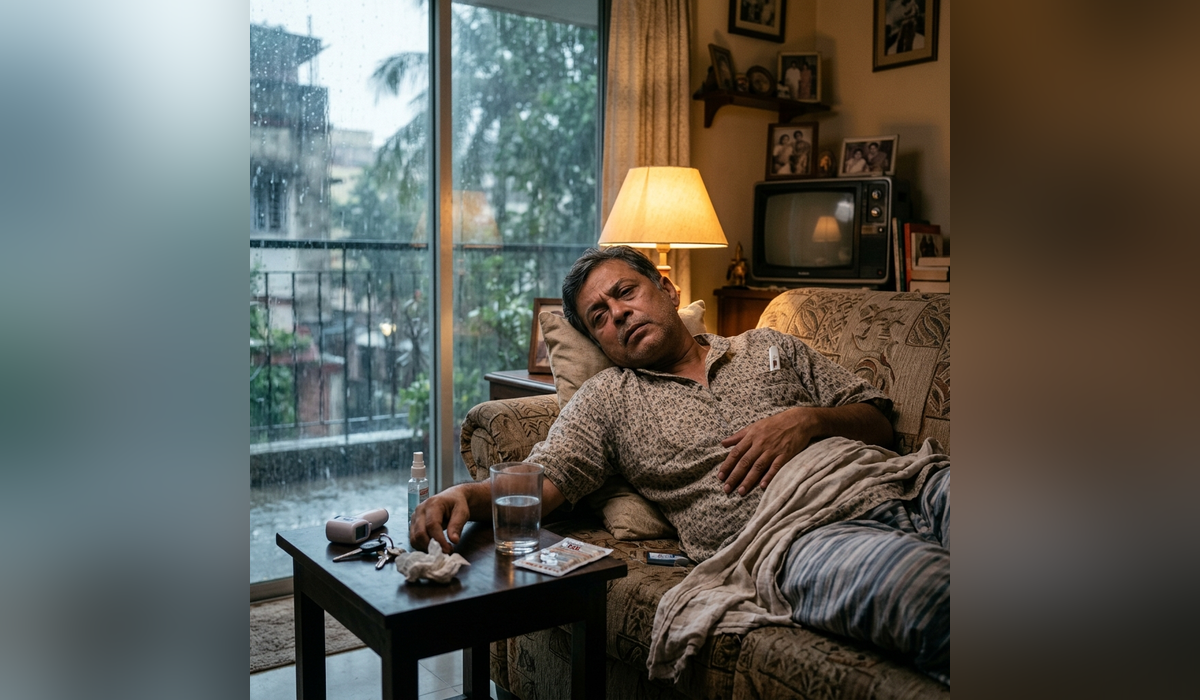
Every year, as the rains set in across Vadodara — Bhayli, Gotri, Alkapuri, Manjalpur — the same pattern repeats: loose motions, cramping, a bit of fever, and most households treat it as routine. ORS, a day of khichdi, and it passes. Most of the time, that's exactly right.
But monsoon gastroenteritis is also one of the more common reasons for doctor visits and hospital admissions among children and elderly adults during these months — precisely because a mild case and a dangerous one can look identical in the first 24 hours. This guide covers what causes it, how to tell ordinary from serious, and when testing is actually worth it.
What Is Gastroenteritis?
Gastroenteritis is inflammation of the stomach and intestinal lining, typically triggered by a viral, bacterial, or parasitic infection picked up from contaminated food or water. During the monsoon, waterlogging, sewage overflow, and spoiled food push infection rates up sharply — bringing watery stools, cramping, vomiting, and a low fever. Healthy adults usually recover in 2–3 days with rest and fluids. It becomes a medical concern when dehydration sets in, stool contains blood, fever is high or persistent, or the patient is an infant, young child, pregnant woman, or someone with an existing health condition.
Common Myths, Corrected
| Myth | Reality |
|---|---|
| Boiled water is always safe | Boiling kills pathogens, but storing it in an unclean container can recontaminate it — cleanliness matters at every step, not just boiling |
| "Just loose motions" can't be serious | Cholera and mild viral infections can look identical at first; severity often only shows once dehydration sets in fast |
| Fasting helps starve out the infection | The body needs nutrition to recover — fasting risks dehydration and low blood sugar instead |
| Curd or probiotics cure diarrhoea instantly | They may support gut recovery but don't replace rehydration and don't work against bacterial or parasitic causes |
| Once symptoms stop, the infection is gone | Some parasitic infections persist even after symptoms fade — a follow-up stool test may still be needed |
Why Monsoon Is Peak Season
- Water contamination — heavy rain overwhelms drainage, and old pipelines let sewage seep into supply lines, spreading E. coli, Vibrio cholerae, Shigella, rotavirus, and norovirus through drinking and washing water.
- Food spoilage in humidity — cut fruit, street food, dairy, and leftovers turn unsafe faster in warm, damp weather.
- Contaminated produce — leafy greens grown in flooded fields can carry parasitic cysts (Giardia, Entamoeba histolytica) that survive light washing and cooking.
- Weakened digestion — heavier, oilier monsoon eating combined with sluggish digestion makes the gut more vulnerable.
- Crowded, damp living conditions — close quarters make person-to-person spread easier, especially in households and schools.
- Ageing municipal infrastructure — old pipes under monsoon pressure are prone to leaks and cross-contamination with sewage.
- Informal food supply chains — vegetables, milk, and cut fruit often travel for hours in humid conditions without reliable cold storage.
Symptoms to Watch For
In Adults
- Watery stools, three or more times in 24 hours
- Cramping and bloating
- Nausea, with or without vomiting
- Low-grade fever (37.8–38.5°C)
- Fatigue and reduced appetite
- Mild headache and body ache
In Children
Children tend to progress faster and more dramatically because their fluid reserves are so much smaller relative to body weight:
- More frequent, watery stools than an adult with the same infection
- Repeated vomiting that can make oral rehydration difficult
- Unusual drowsiness or irritability
- Fewer wet nappies or reduced urination
- A sunken soft spot (fontanelle) in infants
- Crying with little or no tears
A child can move from mild diarrhoea to dangerous dehydration in hours — far faster than an adult with the same infection.
Adults vs. Children at a Glance
| Aspect | Adults | Children |
|---|---|---|
| Time to dehydration | 24–48 hours of untreated fluid loss | Can occur within 6–12 hours in infants |
| Most reliable warning sign | Reduced urination, dizziness, dry mouth | Fewer wet nappies, no tears, drowsiness |
| Common trigger | Outside food, contaminated water, travel | School/daycare exposure, contaminated hands |
| When to seek care | After 2–3 days with no improvement, or any red flag | Same day if dehydration signs appear |
Viral, Bacterial, or Parasitic — Does It Matter?
Yes — the cause changes both how long symptoms last and how they should be treated:
| Type | Common Causes | Typical Duration | Distinguishing Signs |
|---|---|---|---|
| Viral | Rotavirus, norovirus | 1–3 days | Watery stools, vomiting, mild fever; spreads fast in households |
| Bacterial | E. coli, Salmonella, Shigella, cholera | 3–7+ days | Higher fever, cramping, sometimes blood/mucus in stool |
| Parasitic | Giardia, Entamoeba histolytica | Can persist for weeks untreated | Intermittent loose motions, bloating, gradual weight loss |
Because all three can look nearly identical in the first day, guessing based on symptoms alone isn't reliable — this is exactly why persistent or unusual cases benefit from an actual stool test.
Warning Signs That Need Medical Attention
- Excessive thirst, dry mouth, dizziness on standing, or dark, reduced urination
- Blood or mucus in the stool
- High fever above 39°C, or fever lasting more than 2 days
- Diarrhoea lasting more than 3 days without improvement
- Severe or worsening abdominal pain, especially if localised
- Repeated vomiting that prevents keeping fluids down
- Symptoms in an infant, elderly person, pregnant woman, or someone with a chronic condition like diabetes or kidney disease
- Recent travel or a known local outbreak
One of these alone is reason enough to consult a doctor. Several together — for example, a child with repeated vomiting, sunken eyes, and no urination for six hours — needs urgent care, not a wait-and-see approach.
When Is Testing Actually Needed?
Mild cases that improve within 48 hours rarely need testing. But if symptoms are severe, persistent, recurring, or don't fit a typical viral pattern, these tests help confirm what's actually going on:
- Stool routine and microscopy — the first-line test; checks for parasites, bacteria, blood, mucus, and inflammation. Especially useful past 3–4 days of symptoms or if they recur after seeming to resolve.
- Stool culture and sensitivity — identifies the specific bacterial organism and which antibiotics it responds to, avoiding unnecessary medication.
- CBC (Complete Blood Count) — shows whether the body is actively fighting infection and can flag early dehydration.
- Electrolyte panel — checks sodium, potassium, and chloride levels depleted by diarrhoea and vomiting; important in children and the elderly.
- Fever profile — rules out typhoid or dengue when fever is high or prolonged, since monsoon illnesses can overlap.
Curavya's home phlebotomy team can collect stool and blood samples directly from your home in Vadodara, with results reviewed by our physician team and delivered digitally.
After the Infection Clears
Recovery doesn't stop the moment stools return to normal — the gut lining takes time to heal fully.
- Reintroduce food gradually. Start with clear fluids and ORS, move to bland foods (rice, toast, bananas), and return to normal eating over 2–3 days. Avoid fried, spicy, or heavy food in the meantime.
- Watch for temporary lactose sensitivity. Some infections, especially rotavirus in children, can briefly reduce the gut's ability to digest lactose — dairy may trigger loose stools for a week or two afterward. This usually resolves on its own.
- Follow up if a test came back positive. A repeat stool test after treatment confirms the infection has fully cleared, especially important for parasitic infections that can persist without symptoms.
Gastroenteritis vs. Other Monsoon Illnesses
| Illness | Primary Symptoms | Distinguishing Feature |
|---|---|---|
| Gastroenteritis | Diarrhoea, vomiting, cramping, mild fever | GI symptoms dominate from day one |
| Typhoid | Prollonged step-wise fever, weakness, sometimes constipation | Fever builds gradually over days |
| Dengue | High sudden fever, severe body ache, rash, low platelets | GI symptoms secondary to fever and body ache |
| Malaria | Cyclical fever with chills and sweating | Fever pattern is periodic, not continuous |
When fever is high, prolonged, or out of proportion to gastrointestinal symptoms, a doctor may recommend a fever profile alongside a stool test.
Higher-Risk Groups
- Elderly adults — reduced thirst sensation, existing kidney or heart conditions, and medications like diuretics can make dehydration develop faster and be harder to spot.
- Pregnant women — dehydration affects both mother and pregnancy; fever or limited fluid intake warrants prompt medical attention.
- People with diabetes or kidney disease — diarrhoea and vomiting can disturb blood glucose and electrolyte balance, so even a mild infection needs closer monitoring.
- People with weakened immunity — those on immunosuppressive medication or cancer treatment are more prone to prolonged or severe infections.
Staying Safe Outside the Home
- Waterlogged streets — wash hands and feet with soap after wading through them; avoid touching your face or eating with unwashed hands.
- Eating out — favour places with reliable refrigeration over roadside vendors; hot, freshly cooked food is safer than pre-cut fruit or raw salads.
- Schools and daycare — regular handwashing before meals and after the washroom, plus keeping sick children home, limits classroom outbreaks.
- Workplaces — shared pantries, dispensers, and washrooms are common transmission points; regular surface sanitisation helps.
Home Care for Mild Cases
- Oral rehydration — ORS solution is more effective than plain water for replacing lost fluids and electrolytes.
- Small, frequent sips if nausea or vomiting makes larger amounts hard to keep down.
- Bland, light food — khichdi, boiled rice, bananas, toast — once appetite returns; avoid oily, spicy, or heavy dairy in the meantime.
- Rest, since the body is actively fighting infection.
- Avoid self-medicating with anti-diarrhoeal drugs in children, or in adults with fever or blood in the stool, without medical advice — stopping diarrhoea artificially can sometimes prolong certain infections.
If symptoms haven't improved within 48 hours, or any red flag appears, pair home care with a medical consultation rather than waiting further.
Rehydration Options Compared
| Fluid | Electrolyte Content | Best For |
|---|---|---|
| WHO-formula ORS | Balanced sodium, potassium, glucose | Active diarrhoea/vomiting, all ages |
| Coconut water | Rich in potassium, lower sodium | Mild cases, alongside ORS |
| Plain water | None | General hydration, not sufficient alone |
| Sports drinks | Present but often high sugar, low sodium | Not ideal as primary rehydration, especially for children |
Prevention Checklist
- Drink boiled or filtered water; avoid discoloured water and ice from unverified sources
- Wash fruits and vegetables thoroughly, especially leafy greens
- Skip street food during heavy rain, when refrigeration is hardest to maintain
- Wash hands with soap before eating and after using the washroom
- Refrigerate cut fruit and cooked food; avoid food left out for over an hour or two
- Isolate sick household members where possible and disinfect shared bathroom surfaces
- Keep children's hands and toys clean, especially after time outdoors or in waterlogged areas
Considering a Test During Monsoon?
If your symptoms — or your child's — match any warning sign above, a stool routine and microscopy test or a fever and electrolyte panel can confirm the actual cause instead of guesswork. Curavya's home pathology service sends a trained phlebotomist to your doorstep anywhere in Vadodara, with physician-reviewed reports delivered digitally — so a sick child or a monsoon downpour doesn't stand between you and a clear diagnosis.
📞 Call or WhatsApp: +91 6355773042
🌐 Book online: curavya.rsappz.com
Key Takeaways
- Monsoon gastroenteritis is common and usually self-limiting, but mild and serious cases can look identical early on.
- Contaminated water, spoiled food, unwashed produce, and person-to-person spread all peak during the rains.
- Dehydration signs, blood in the stool, high or prolonged fever, and symptoms in children, elderly adults, or pregnant women need medical attention.
- A stool test, sometimes paired with an electrolyte panel or fever profile, confirms the cause when symptoms are severe or prolonged.
- ORS-based rehydration, light food, and rest handle most mild cases; antibiotics should only be used when a bacterial cause is confirmed.
Frequently Asked Questions
How long does monsoon gastroenteritis usually last?
Most viral cases resolve in 1–3 days. Bacterial infections can last 3–7 days, and parasitic infections may persist for weeks if untreated.
Is gastroenteritis the same as food poisoning?
They overlap significantly. Food poisoning refers specifically to illness from contaminated food, while gastroenteritis is a broader term covering infections from food, water, or person-to-person contact.
Can gastroenteritis cause fever without diarrhoea?
It's uncommon but possible early on, with diarrhoea following within a day. Fever without any GI symptoms is more likely to point to a different monsoon illness, like dengue or typhoid, worth checking separately.
Should I take antibiotics for a stomach infection in monsoon?
Not without medical guidance. Most cases are viral, and antibiotics won't help — they can disrupt gut bacteria and contribute to resistance. A stool test confirms whether they're actually needed.
Can adults get dehydrated as quickly as children?
No — adults have larger fluid reserves and more efficient kidneys, so dehydration usually develops over 1–2 days rather than hours, which is why children need closer monitoring.
Is it normal for a stomach infection to recur every monsoon?
Recurring infections usually point to an ongoing exposure source — a household water supply, a nearby vendor, or a food hygiene gap — rather than personal susceptibility, and are worth discussing with a doctor if the pattern repeats.
This article is for general awareness only and is not a substitute for professional medical advice. Please consult a physician for diagnosis and treatment decisions. For a home consultation or test in Vadodara, contact Curavya at +91 6355773042.